








Wire & Cable
PCIe Twinax Cable (5.0 / 6.0 / 7.0)
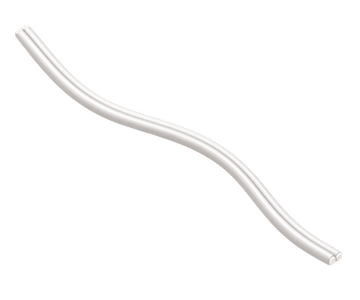
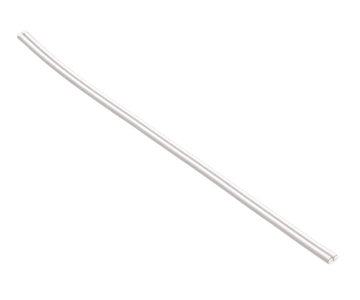
PCIe differential wire for in-chassis links between a board and GPUs, NVMe, and accelerators. One series in 5.0, 6.0, and 7.0, up to 128 GT/s per lane. The silver-white pair is the wire itself, for server and module builders to terminate.
Get a Quote
What is PCIe Twinax Cable?

Applications
On a GPU link inside an AI training or inference server, this wire is the short run from the board to the card. The lane has to stay a controlled differential pair through a tight bend, and a loose pair shows up as errors once the rate reaches 32 GT/s. On an NVMe backplane, the same wire brings the drive bays back to the board. Several drives share that chassis, so the pair has to hold impedance without the height of a round cable. Between the board and an accelerator, it carries the PCIe lanes across a gap the connectors do not close on their own. The same build is also used in HPC systems, PCIe expansion cards, and enterprise storage servers, wherever the path inside the chassis has to stay flexible.
Key Benefits
Differential impedance is held to the PCIe requirement for the generation on that build, so the pair does not drift as the rate steps from 32 GT/s on 5.0 to 128 GT/s on 7.0. That keeps the lane inside the loss the board was laid out for, instead of asking the silicon to recover a pair that has already wandered. Pair skew is set with the order. The two conductors of a lane are cut and paired as one length, so they arrive together rather than opening an eye only on the bench. The fine silver-white wire bends through a tight chassis. The route can turn at a connector or a backplane exit without a stiff cable pushing on the card, and the pair stays together through that turn. 5.0, 6.0, and 7.0 stay one series: the customer picks the generation that matches the board.
PCIe 5.0 vs 6.0 vs 7.0: Which Twinax Wire Do You Need?
Fine silver-white differential wire for in-chassis GPU, NVMe, and accelerator links. Shared rating is -40 to +85°C, with RoHS and REACH. Impedance and skew are set to the order. The 7.0 build is listed as 28–34 AWG, in x4, x8, or x16.
Which model is right for you?
|
|

|
|
|---|---|---|---|
| MODEL | PDP-203 · PCIe 5.0 | PDP-204 · PCIe 6.0 | PDP-205 · PCIe 7.0 |
| Per-Lane Data Rate | 32 GT/s | 64 GT/s | 128 GT/s |
| x16 Bandwidth | ~128 GB/s | ~256 GB/s | 512 GB/s |
| Protocol | PCIe 5.0 / 4.0 / 3.0 | PCIe 6.0 / 5.0 / 4.0 | PCIe 7.0 / 6.0 / 5.0 / 4.0 |
| Encoding | NRZ (128b/130b) | PAM4, Flit Mode | PAM4, Flit Mode |
| Operating Temperature | -40 ~ +85°C | -40 ~ +85°C | -40 ~ +85°C |
| Compliance | RoHS, REACH | RoHS, REACH | RoHS, REACH |
Key Features
Impedance, skew, length, wire diameter, shielding, and insulation color are built to order.
| Feature | Description |
|---|---|
| Construction | Fine silver-white differential wire |
| Impedance | Held to the PCIe differential requirement |
| Shielding | Optional |
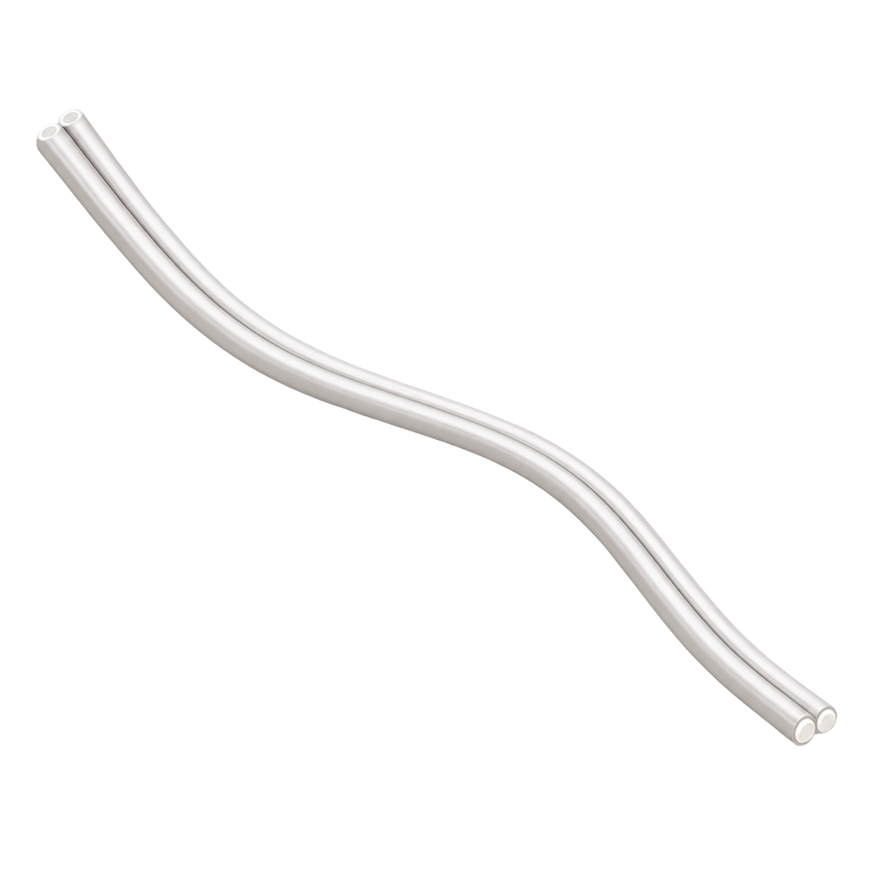
PCIe differential wire for AI server links
Get a Quote