







The drag chain is already on the machine when the cable inside it gets ordered. A CNC, a production line, a conveyor, a laser, or the linear axis of a logistics handler travels back and forth, and someone still has to buy the cable that bends with that travel. One line that only says "flex" or "drag chain" comes back as three different quotes: the plastic carrier, a lamp cord, and bulk cable for inside the chain. This guide is for the buyer writing that cable order. How to choose cable for drag chain is the six decisions below, in the order they should be made, and a list you can paste into the request.
What is continuous flex cable? It is round cable that sits inside a drag chain and bends back and forth with the chain, carrying power or control. What is flex cable is the wider question, and it covers cord and fixed wiring as well as this duty. What is drag chain cable, in a search result, is often the plastic carrier. The cable is a separate purchase.
The product behind it is Lianbang's continuous flex cable, a black round jacket supplied by the meter for the machine builder to terminate. Power, control, and shielded builds are one series, rated -20 to +80°C. Core count, wire gauge, and jacket color are made to order. The rules apply to any cable bought for that kind of chain.
Decision 1: Name the product. The plastic carrier and the cable inside it are two purchases.
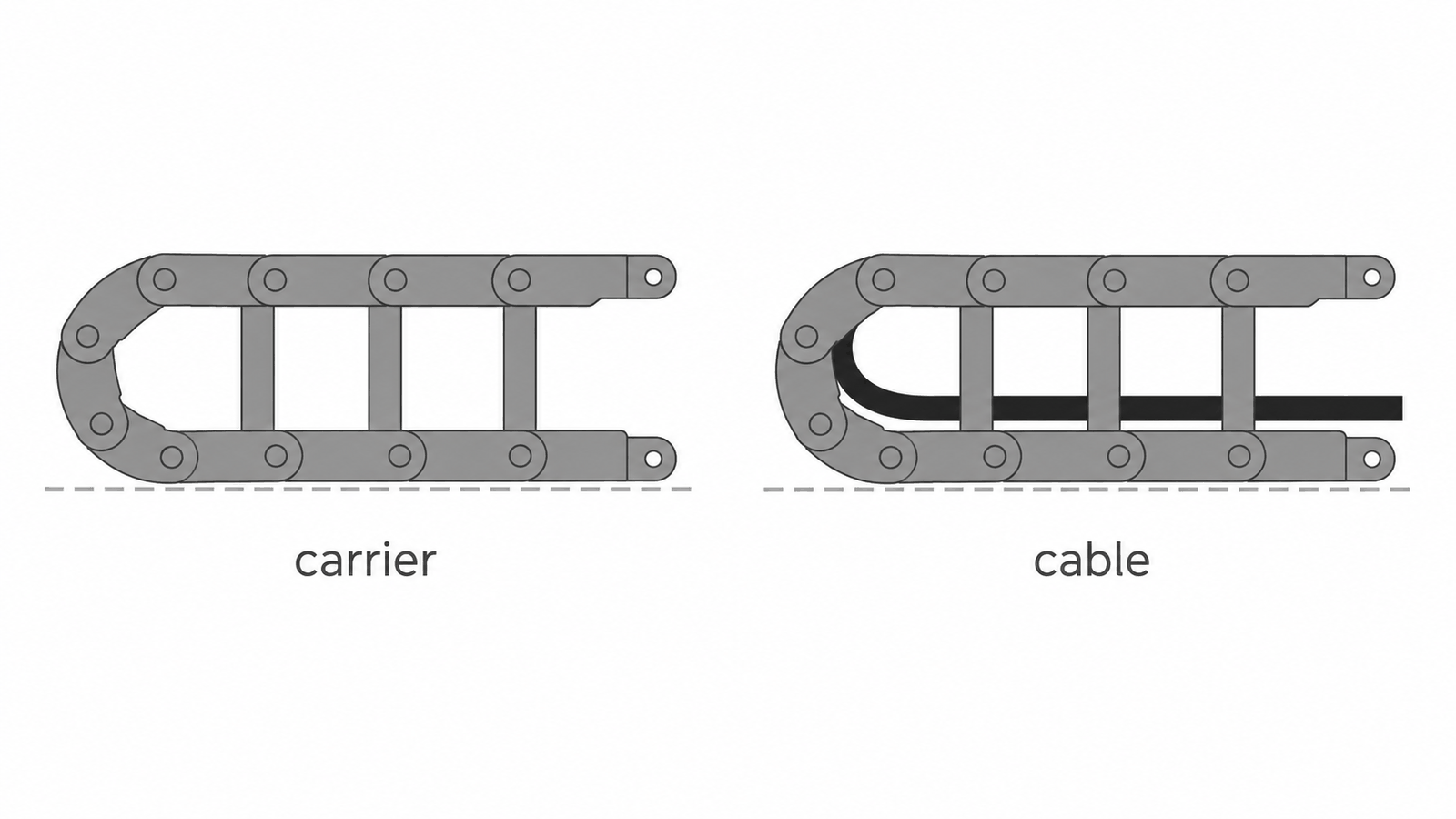
A request that says only "drag chain" gets whichever product that supplier sells under the word. The carrier is the mechanical part that travels. The cable lies in it and bends. Write the order as the cable.
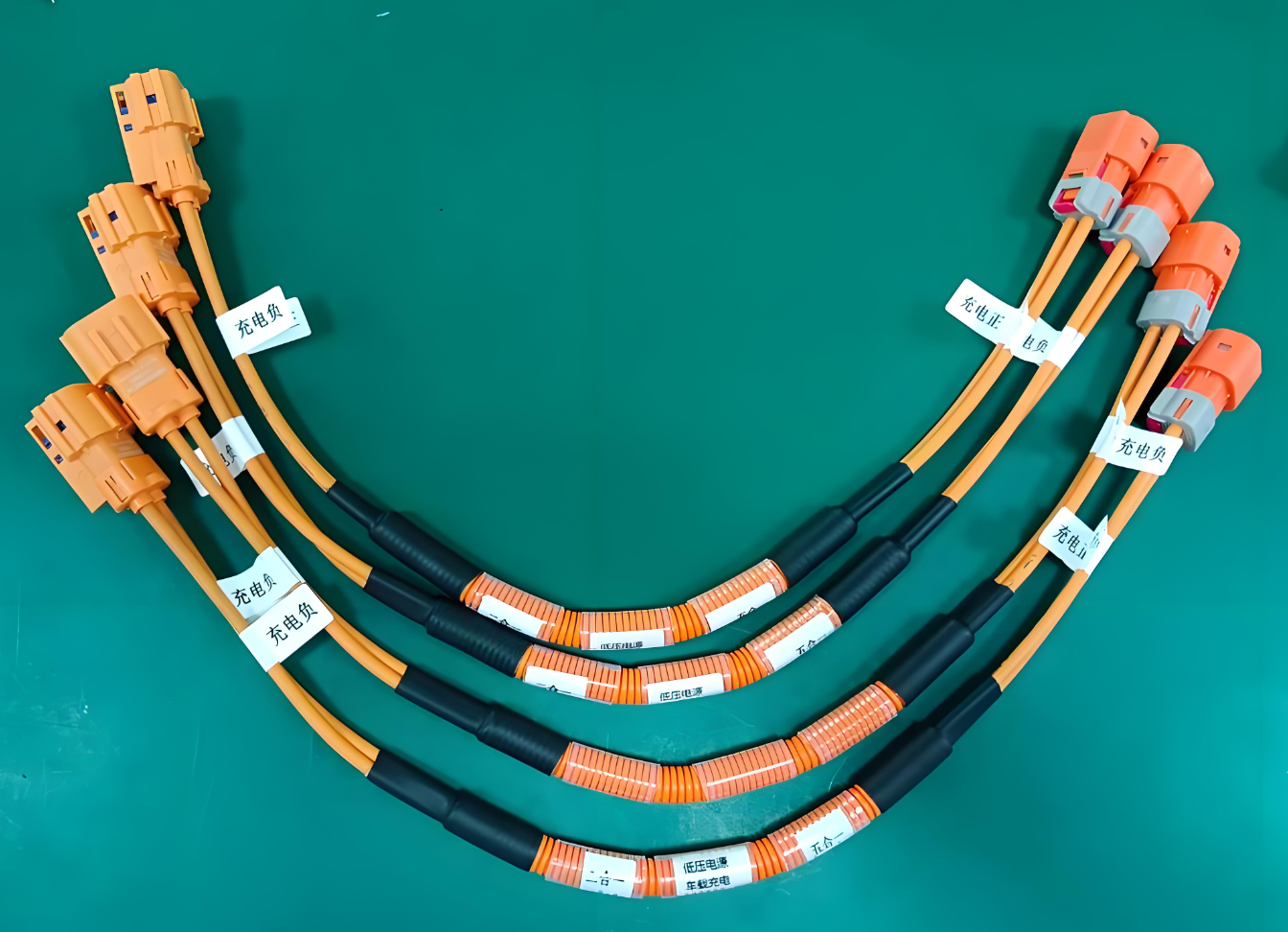
The difference between flexible cable and flexible cord is the duty. A flexible cord hangs on a lamp. It is not built to bend against a chain wall for a shift. A control cable that lives in a tray stays put. Neither one is the cable for this chain. If the quote you need has connectors on it, that harness is a separate quote. This page is the bulk cable.
Decision 2: Motion. This cable bends in one plane. A robot wrist is a different order.
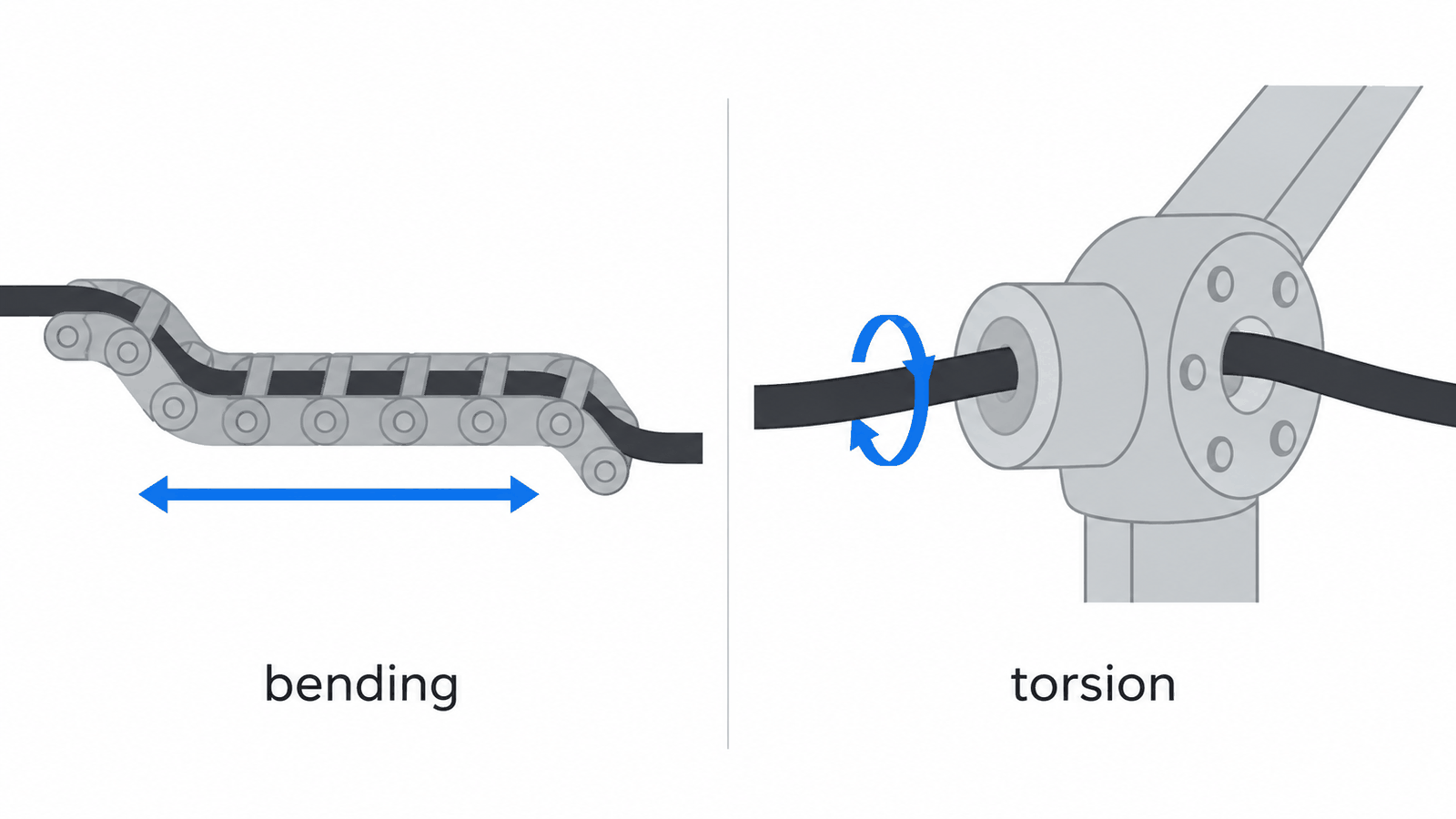
Continuous flex vs robot cable is a motion difference, and drag chain cable vs robot cable is the same split. The chain travels in one direction. The cable bends with it, in one plane. A robot wrist also twists the cable around its own axis.
Torsion vs bending cable is that split. A jacket and a lay made for repeated bending get twisted open on a wrist. A cable made for torsion, put on a straight chain, is paying for a motion the axis never makes. Write the order as reciprocating bend, with no rotating joint on that run. A wrist or a rotary axis is a robot-cable order.
Decision 3: Build. Say power, control, or shielded.
Flexible cable types on this series are power, control, and shielded. Power carries the load. Control carries switches and signals. They are the same series, and the build is made to order, so the request has to name which one the chain is carrying.
Control cable vs flexible cable is the fixed-install mix-up. A control cable in a tray does not rub a chain wall all day. The control build here does. Shielded or unshielded flex cable is the next line: pick the shield when the run sits next to a drive. The card does not publish whether that shield is foil, braid, or both, so the construction is confirmed on the order.
Decision 4: Cores and gauge. Count the circuits. Leave the AWG for the order.
How many cores flex cable is a count of circuits. Power cores, control cores, and whether the shielded group is separate each get their own line. Do not estimate "one flexible cable" and leave the count blank.
Flexible cable vs stranded cable is a construction point. Fine-stranded conductors take that repeated bend, and the cores are laid in layers so they do not saw against each other. Stranded only means the copper is not one solid wire. A coarse strand still breaks in a chain. High flex cable specifications you can read off this card are the builds, the temperature, and the jacket color. Wire gauge is made to order. A published AWG range is not on the card, so the gauge is confirmed on the order against the current and the route.
Decision 5: Jacket and temperature. Describe the oil. Let the compound be confirmed.
Pur vs tpu vs pvc cable is a jacket choice: how the jacket takes abrasion, oil, and the rub along the chain. Oil resistant cable when the machine throws coolant or oil mist. Whether oil resistance is standard on this cable is not on the card, so it is confirmed on the order. Write the shop: oil or no oil, coolant or no coolant, and the temperature the chain actually sees.
Flex cable temperature on this card is -20 to +80°C. Black is the jacket color. Other colors are made to order, so two runs in one chain can be told apart. The compound itself is confirmed on the order against the environment you described.
Decision 6: Length, diameter, and the space inside the chain.
Measure the cable at both ends of the travel, along the path inside the chain, and add slack at the bend. A straight line from one end of the stroke to the other is short. Lianbang supplies that routed length by the meter. The card does not publish a fixed length.
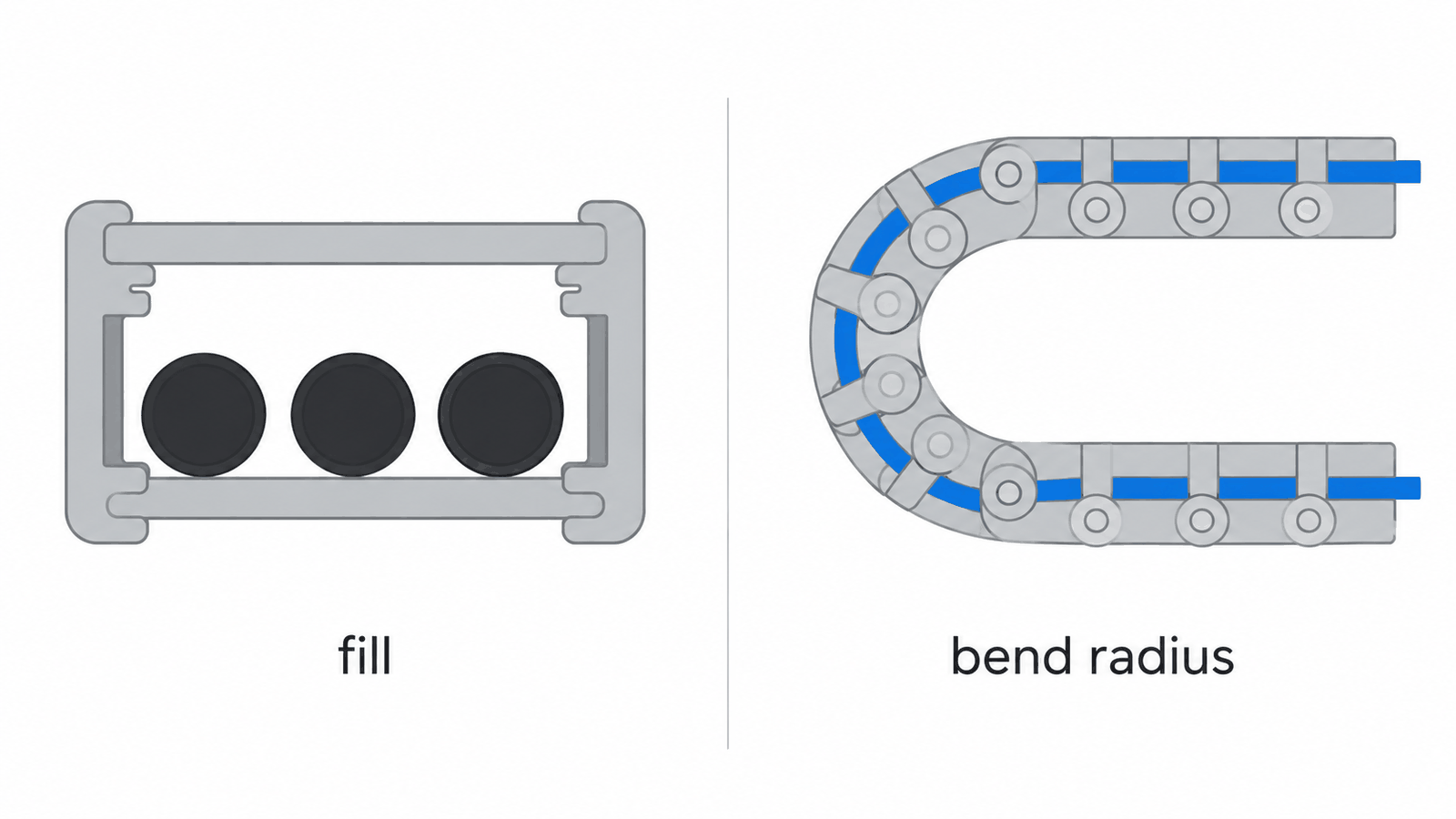
Outer diameter is made to order. Cable fill factor drag chain is how much of the chain's cavity the cables occupy. A cavity packed solid makes the cores crush each other and the jacket saw on the bars. Send the chain's inner width with the cables that have to share it, and the diameter is set against that space.
Minimum bend radius cable has to live with the bend the chain already has. The chain's curve is the radius the cable will be forced through. This card does not publish a multiple. Put the chain's bend radius on the request, and the cable's radius is confirmed on the order.
A flex life test is a cycle count plus the travel, the speed, and the radius it was run at. A count with none of those is not a number two suppliers can match. Flex life on this card is blank. It is confirmed on the order, with the test conditions, and it is not a published cycle count.
Five mistakes that put the wrong cable in the chain
- Comparing a quote for the plastic carrier with a quote for the cable that lies inside it.
- Putting this cable on a robot wrist, or buying a torsion cable for a chain that only bends.
- Leaving the shield off a signal run that sits next to a drive.
- Substituting a lamp cord, or a control cable meant for a tray, for the cable inside the chain.
- Ordering the wrong product. This series is continuous flex cable, black round jacket, supplied by the meter for the machine builder to terminate, rated -20 to +80°C, in power, control, or shielded builds. A harness with connectors is a separate quote. A continuous flex ethernet cable carries data. This card carries power or control, and a data cable is a different quote.
What to send for a quote
Paste this into the request.
- The machine: CNC, production line, conveyor, laser, or a logistics linear axis, and that the cable sits inside the drag chain
- The motion: reciprocating bend only, with the travel if you have it
- The build: power, control, or shielded
- Core count, split by circuit
- Wire gauge, if the electrical team has already sized it
- Jacket color, if more than one cable shares the chain
- Oil, coolant, and the temperature the chain sees
- Routed length at full travel, with the slack at the bend
- The chain's inner width, and the chain's bend radius
- Whether a connector harness is a separate quote
Core count, wire gauge, jacket color, length, and outer diameter are made to order on the continuous flex cable, and so is the choice of power, control, or shielded. Flex life, bend radius, jacket compound, shield construction, and oil resistance are confirmed on the order. Send the list above and the quote comes back against the chain on your machine.