







The module shell is already laid out when the short run inside it gets ordered. The paddle card is placed, the optical engine is placed, and someone still has to buy the cable between them. How does a differential work, on a parts page, is a car axle. This page is the cable. How to choose cable for qsfp module is the six decisions below, in the order they should be made, and a list you can paste into the request.
What is qsfp? It is the pluggable module. What is qsfp cable, on a shopping page, is usually the jumper that runs between two cages on a switch. The run that stays inside the module shell is a separate order.
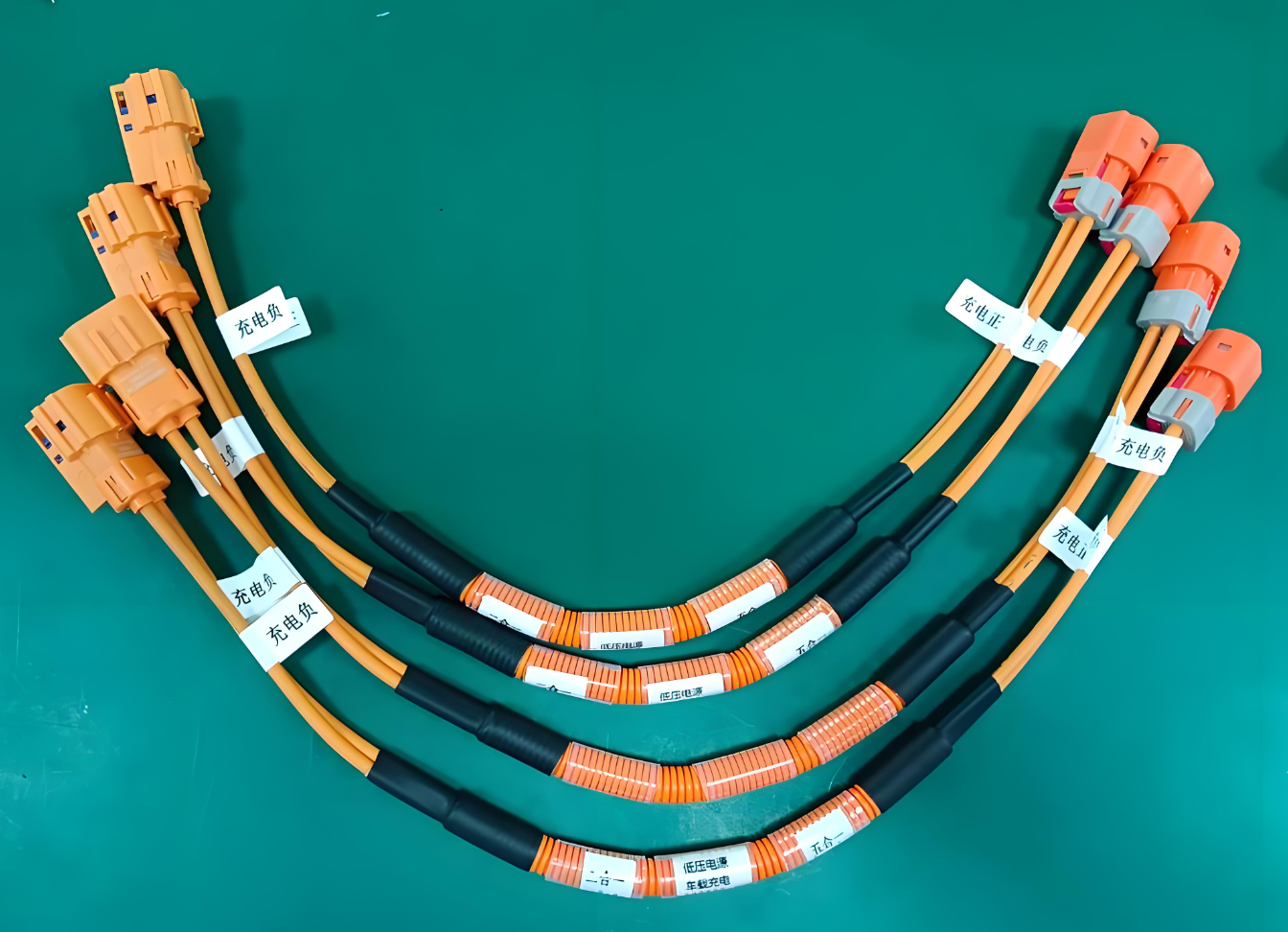
The product behind it is Lianbang's QSFP high-speed differential cable, a purple round jacket, eight differential pairs, 56 Gbps per lane, for QSFP28 and QSFP56, rated -40 to +85°C. It is supplied by length for the module builder to terminate. The rules apply to any cable bought for that short run inside the shell.
Decision 1: Name the product. A DAC and the wire inside the module are two orders.
A request that says only "QSFP" gets whichever product that supplier sells under the word. Qsfp cable types split three ways: a DAC, an AOC, and the wire inside the module. This page is the last one.
Twinax cable vs dac is the same split in another vocabulary. A DAC is the finished jumper, plugs included. Dac cable vs fiber is a choice between two finished links outside the cage. Those lengths and those plugs stay off this order. If the quote you need has a QSFP plug on it, that jumper is a separate quote. This page is the bulk cable.

Decision 2: Module and rate. Write QSFP28 or QSFP56, and keep the lane at 56 Gbps.
Qsfp vs sfp looks like two cables. It is two module shapes. The difference between sfp and qsfp is that shape: SFP is the smaller cage, QSFP is the wider one this wire is built for. Write the module family on the order so the quote is not priced as an SFP jumper.
Qsfp28 vs qsfp56 is one series on this card. Both modules use it. The per-lane rate the card publishes is 56 Gbps. 56g vs 112g cable is a different rate. 112G is not this wire's rate. The same short run shows up inside 400G and 800G optics. That is where the cable can sit. It is not a second data rate to copy onto the request.
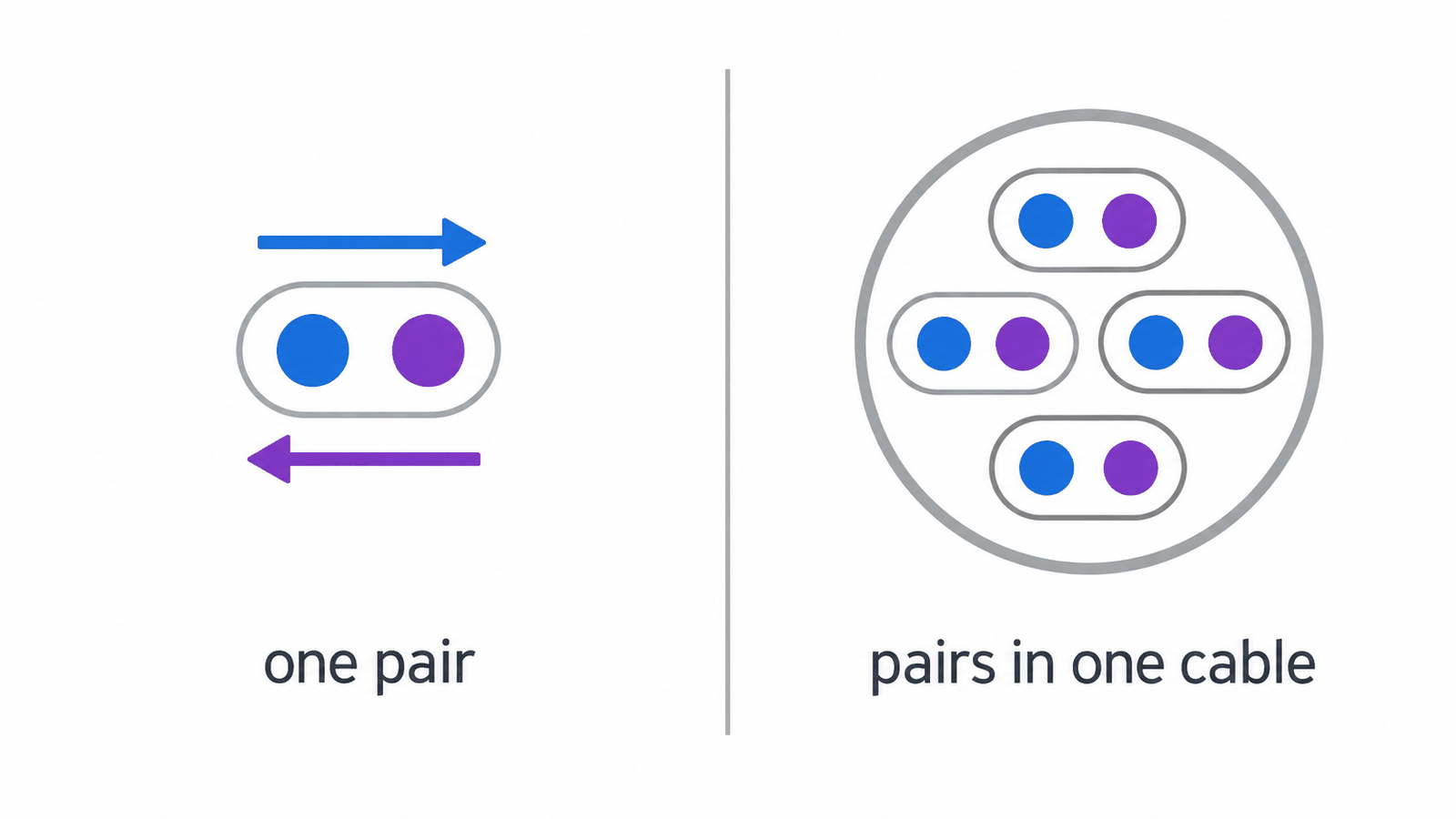
Decision 3: Pairs. Write eight differential pairs.
What is a differential pair? Two conductors driven as one lane, so each lane keeps its own path and the pairs do not have to borrow a shared return through a crowded shell. What is differential pair signal is the signal those two conductors carry. Differential pairs what you need to know, on this order, is the count: eight pairs. That count is the spec row. Do not leave it as "a high-speed cable" and let the supplier guess.
Low speed vs high speed differential is the other mix-up, once the car part is out of the way. A slow control pair and this lane are different orders. This card is the high-speed run, 56 Gbps per lane.
Decision 4: Construction. Leave the twinax name and the ohms for the order.
What is twinax cable is a structure people search for: two conductors used as a pair. What is twinax cable used for comes out as two places. Outside the cage it is the copper in a finished jumper. Inside the shell it is this short run. Whether this build is called twinax is not on the card, so the name is confirmed on the order. Do not print it as the product title.
Twinax cable vs fiber is the copper-versus-light split. Fiber is how the module leaves the cage. This cable stays in the shell. Twinax cable vs twisted pair is a lay question. A twisted pair is the general form of two conductors. The card does not publish the lay, the pitch, or the shield construction.
100 ohm differential pair is a number other catalogs print. Differential impedance on this card is blank. Write the module's target if the signal team has one, and the ohms are confirmed on the order. A shield can be added when pairs sit against each other, or left off when the module does not need it. That choice is made to order. Foil or braid is confirmed on the order.
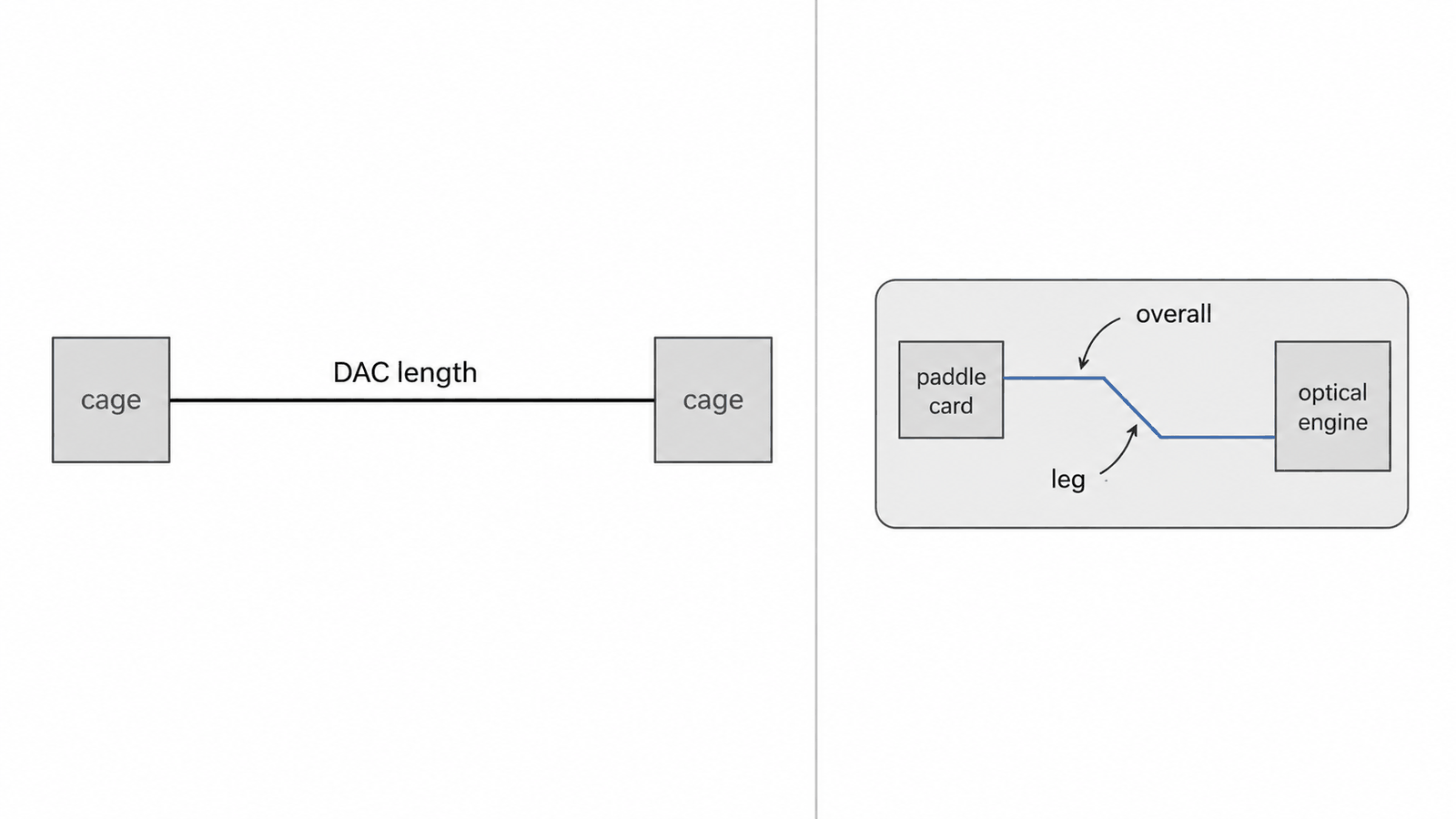
Decision 5: Length. Keep the DAC length limit off the run inside the shell.
Twinax cable length limit is a question about the jumper between two cages. Those cables are sold in fixed lengths because they have to close the loss across that outside run. None of those lengths is the cut inside the module, and this card does not publish a meter figure.
Measure the path the wire will take inside the shell: off the paddle card, through the tie points, onto the optical engine. Order the overall length and the leg length. Both are made to order. The applications on this card are that short inside run, a few centimeters, not the patch length on a DAC listing.
Decision 6: Gauge, diameter, and skew. Set them against the shell.
Wire gauge, outer diameter, and pair layout are made to order. The outer diameter has to fit the module, so send the space the shell actually leaves. A published AWG is not on the card. A gauge taken from another catalog is confirmed on the order, against that space and the lane.
Skew in differential cable is the delay between the two wires of one pair. The card does not publish a picosecond figure. Skew is confirmed on the order against the module's budget. Purple is the jacket color. Other colors are made to order. The temperature on the card is -40 to +85°C.
Five mistakes that put the wrong wire in the module
- Comparing a DAC, plugs included, with the cable that stays inside the shell.
- Writing 112G, or the optic's 400G or 800G, as this wire's per-lane rate. The published lane rate is 56 Gbps.
- Copying a DAC length limit onto the overall length and the leg length inside the module.
- Filling an ohm value, including the 100 ohm figure from another catalog, or a gauge the card does not list.
- Ordering the wrong product. This series is purple round cable, eight differential pairs, 56 Gbps per lane, for QSFP28 and QSFP56, rated -40 to +85°C, supplied by length for the module builder to terminate. A jumper with plugs is a separate quote. The word twinax is confirmed on the order, not printed as the name.
What to send for a quote
Paste this into the request.
- The module: QSFP28 or QSFP56, and that the cable stays inside the shell
- Where it sits: between the paddle card and the optical engine, including 400G or 800G optics if that is the module
- Pair count, if it is not the eight on this card
- Shield or no shield
- Overall length and leg length inside the shell
- The space the shell leaves for the outer diameter
- Wire gauge, if the signal team has already sized it
- Pair layout, if the module drawing fixes it
- A target impedance, if the signal team has one
- Jacket color, if more than one run shares the shell
- Whether a plugged jumper is a separate quote
Overall length, leg length, wire gauge, outer diameter, pair layout, jacket color, and the shield option are made to order on the QSFP high-speed differential cable. Impedance, skew, shield construction, and whether the build is called twinax are confirmed on the order. Send the list above and the quote comes back against the path inside your module.